
Year: 2023

  • Which aircraft are better for flight schools, composite or metal?
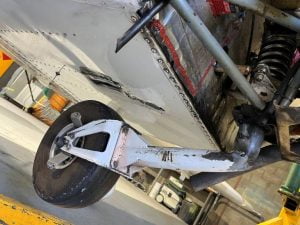
    I have now owned and operated a flight school for over 10 years and in that time I have used both metal and composite training aircraft. I have had experience in maintaining and using both types for ab-initio and navigation training.

    Before I go into more detail on what I personally prefer, let’s firstly look at the benefits and disadvantages of composite and metal aircraft.

    Metal airframes 

    Metal airframes are generally constructed out of aluminium and consist of an internal metal frame covered in a metal skin that is usually riveted to the frame.

    Benefits of aircraft constructed from metal 

    • Low cost and easily available materials
    • Proven durability
    • Can be stored outside for long periods of time
    • Fairly simple manufacturing and repairs
    • Easy to inspect

    Some of the disadvantages are:

    • Once the skin is damaged it is hard to bend back into place and often needs to be repaired.
    • Corrosion can affect aluminium materials over time
    • Prone to fatigue and cracking over long periods of time
    • Metal airframes can also interfere with compasses and radio communications

    Composite airframes 

    Many modern aircraft are now designed and manufactured with composites. A composite is any material made from numerous materials. For aviation, this normally means fibreglass, carbon and/or kevlar. These materials are normally mixed with a plastic resin and bonded together in layers to create a strong structure. Composite factory-built aircraft are built with a mould. The composite material is layered with resin into the mould then cured (hardened) to create the shape of the aircraft piece.

    Composite airframes generally have high tensile strength and are usually lighter than a metal aircraft. Composite construction allows more freedom compared to aluminium, when it comes to designing exotic modern shapes. Composite aircraft don’t often require any internal frame as the shell of the aircraft is composed of the load bearing structure.

    Advantages of composite aircraft 

    • High tensile strength
    • Resistance to fatigue and corrosion
    • No frame and less weight than metal aircraft (up to a 50% saving in weight)
    • Easy to mass produce and assemble

    Disadvantages of composite aircraft

    • Expensive to manufacture compared to metal
    • Material can be hard to inspect for damage
    • Can have UV damage if left outdoors for prolonged periods of time
    • Not as easy to repair minor damage compared to metal and requires specialised knowledge of composites
    • Delamination can occur over time or with contact with certain chemicals

    It all comes down to personal preference

    As you can see, there are benefits and disadvantages to both types. When it comes to flying, I enjoy flying in both types. I love the look and feel of composite aircraft, however I appreciate the basic construction and ease of repair of metal aircraft.

    My personal preference is to have metal aircraft in a flight school environment. I currently have an all-metal fleet. While we love being able to fly over the spectacular Caloundra coastline, the downside of being located near the ocean is having corrosion issues. We spend a lot of money on corrosion prevention.

    The biggest benefit of metal aircraft is that unlike with composite, small repairs are easily fixed by most licensed aircraft maintenance engineers. One morning recently, we had a private hirer do a hard landing, snap the nosewheel and damage the propeller. By that afternoon, we had organised a replacement prop, nosewheel and engine mount, and with the help of AMS next door to us, the plane was back in the air within just five working days. If this was a composite aircraft, it would have taken weeks to repair.

    At another time when I was using a carbon fibre training aircraft, during one of the regular maintenance inspections a small crack was discovered on the tail. It had to have a special work order and plans created by the factory on how to repair the crack. I then had to find a specialist carbon fibre repairs who could do the work. The aircraft was offline for three months while this was being repaired, which is not great if you’re relying on that aircraft for your business income. If this was a metal aircraft it could have been repaired within 3 days, as most maintenance engineering companies are set up for metal repairs and have the experience and know-how to repair most metal damage.

    Hangar space, UV exposure and hail damage 

    Hangar space is very hard to find and expensive to rent at major airports on the east coast of Australia. I have two aircraft currently hangared inside and another two outside which get covered in a weather-proof cover when not in use.

    Composites do not fare as well outside as metal aircraft, as UV light can degrade the composite material over a long period of time. Most individuals and flight schools I know who own composite aircraft have them hangared inside for this reason. In fairness, corrosion can also be an issue.

    If hangar space is not an option and the aircraft has to be parked outside then I would suggest metal aircraft may be a better choice. Also, a hail-damaged metal aircraft can generally keep flying after a proper inspection, whereas a composite aircraft with hail damage normally needs expensive and extensive repairs to get it airworthy again. After receiving hail damage to two planes during a fierce storm in late 2019, we erected large hail-proof agricultural nets to prevent further damage to the two planes parked outside.

    I also understand that some composite airframes have better factory support for their owners than what I experienced, and some maintenance facilities have specialist composite repairers on hand, so once again it comes to both a personal and business decision based on your location and aircraft type. If I had ample hangar space, good factory support from the aircraft manufacturer and a licenced aircraft composite repair workshop close by, then I would definitely consider a composite aircraft for my flight school again. Until this happens I will be sticking with metal.

    Happy and safe flying!

    Damien Wills, The GoFly Team

    Please feel free to read more posts or watch the free videos on this flight training platform

  • Short-term memory limitations and how pilots can overcome these

    It is important that pilots are aware of the limitations of short term memory in relation to reducing risk and communication errors when flying. A good example is when a pilot receives instructions from an air traffic controller. An air traffic control instruction can be detailed and be spoken very quickly.

    If the pilot does not focus on the instructions or write the information down, there is a very good chance that the instructions will be forgotten.

    What is short term memory 

    Short-term memory is responsible for temporarily holding and processing new information. When you are first told a new phone number for example  it is stored in your short term memory.

    Limitations of short term memory 

    The duration for which information is stored in short-term memory can vary, but it is generally thought to last between 15 to 30 seconds. The other major limitation is we can only store between 7 to 10 separate items in our short term memory at a time.

    The relationship between short term and long term memory

    Our long term memory is responsible for storing information for an extended period of time, ranging from days to years. It involves transferring information from our short-term memory to long-term storage, through what is known as encoding.

    Encoding requires certain techniques such as visualization, repetition and attention, to transfer information from our short term memory to our long term memory.

    How to minimise short term memory errors

    There are many ways to minimise these memory errors. Below are some simple and effective methods to help boost your short-term memory. Many of these techniques involve actually transferring information from our short term to long term memory.

    1. Focused attention

    Give your full focus to the information you want to remember. Conducting a pre-flight with no distraction or telling a passenger to remain quiet when you are about to talk over the radio would be an example of preparing yourself to have focused attention.

    2. Repetition

    Repetition helps move information from short-term memory to long-term memory. An example of this is when new flight students are learning radio calls they verbalise  radio calls over and over again (from a cheat sheet) until it becomes transferred to their long term memory. 

    3. Visualisation

    Create mental images or associations to help remember abstract information. A good example may be teaching students when they first see a windsock that it is like a pointy finger that always points to where the wind is going. This visualisation helps them remember orientation and how to read a windsock.

    4. Write it down

    If you are receiving a lot of information, the best way to minimise memory loss is to write it down. For instance, most pilots will write down an initial airways clearance as it can be quite complex and involved. This can be done on paper or on an electronic device.

    5. Focus on Key Details

    Identify the most crucial information and focus on remembering those key details instead of trying to memorise every single detail. For instance when receiving a new airways clearance, only write down critical information such as transponder codes, assigned altitude and headings. 

    Being aware of the limitations of the human brain, and in particular memory, is  important in aviation, for mitigating risk and communication errors.

    We hope you enjoyed this article. For more articles, free videos and books please explore the rest of the GoFly Online flight training website.

    Happy and safe flying,

    The GoFly Online Team 

7 Day

FREE

Trial

Get access to the complete catalogue of your chosen subscription level for 7 days. After your free trial, your paid subscription automatically commences. Cancel anytime.

Get FREE Trial

Our
Partners